Distributed for Intellect Ltd

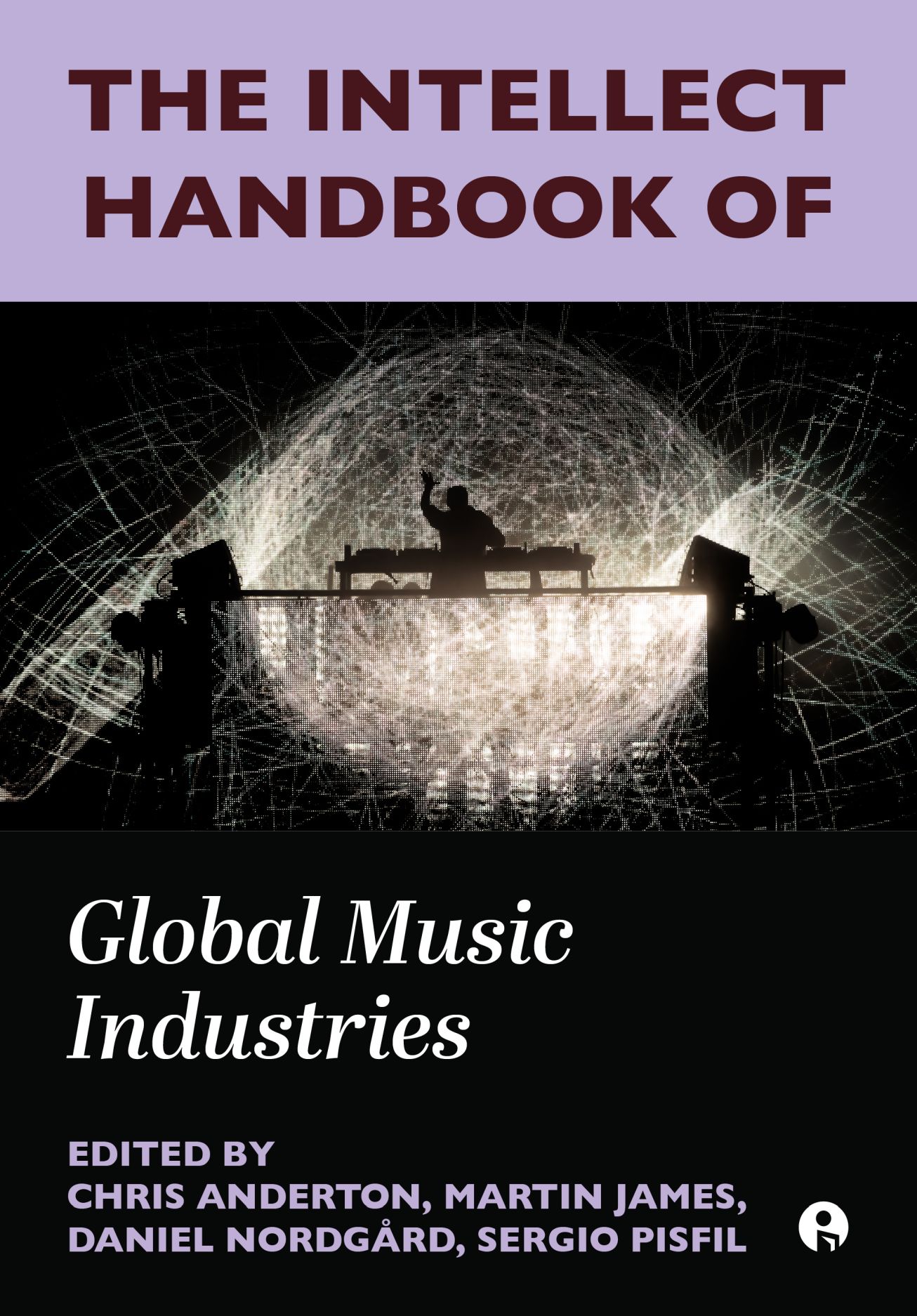
The Intellect Handbook of Global Music Industries

At a moment when music industries worldwide are undergoing profound structural change, this handbook offers a substantial and intellectually expansive contribution to understanding how music circulates, generates value, organizes labor, and shapes cultural life across different global contexts. 

The Intellect Handbook of Global Music Industries offers an ambitious and timely account of the contemporary music industries as a dynamic, globally interconnected field shaped by technological transformation, shifting labor conditions, platform economies, cultural policy, and changing forms of musical production and circulation. Bringing together an international group of established and emerging scholars, the collection provides a wide-ranging exploration of the structures, practices, and debates that increasingly define music industries research in the twenty-first century. The contributing authors address multiple dimensions of the music industries, including artists and managers, recording and publishing, streaming and playlist cultures, live music ecologies, copyright and geopolitics, digital technologies such as artificial intelligence, and the lived realities of creative labor. Particular attention is given to the infrastructures, intermediaries, and power relations that organize contemporary music markets.

Recurring themes include precarity and entrepreneurship, multinational label hierarchies, platform governance, copyright reform, export strategies, discrimination, mental health, and post-pandemic recovery. By combining structural analysis with grounded empirical research, the collection offers a globally situated account of how platform logics and enduring inequalities continue to shape contemporary music industries.

Distinguished by its genuinely global perspective, the handbook moves beyond narrowly Anglo-American frameworks to examine music industries as diverse, uneven, and contested cultural formations operating across multiple geographic, economic, and institutional contexts. Its scope reflects the growing recognition that the music industries can no longer be understood through singular models of production or distribution, but instead require sustained engagement with questions of globalization, digital mediation, labor, infrastructure, governance, entrepreneurship, live performance, and cultural value.

Structured to support both specialist scholarship and interdisciplinary engagement, the handbook is designed to function simultaneously as a major reference work, a teaching resource, and a framework for future research. Its thematic range and international orientation make it especially relevant to scholars and students working across popular music studies, media and communication, cultural industries, sociology, cultural policy, creative labor, and global media studies.


560 pages | 6.69 x 9.61 | © 2027

Music: Ethnomusicology, General Music


Intellect Ltd image

View all books from Intellect Ltd

Table of Contents

List of Figures  List of Tables  Introduction: Perspectives on Global Music Industries Chris Anderton, Daniel Nordgård and Sergio Pisfil   PART I  ARTISTS, SONGWRITERS AND MANAGERS     1.Global Music Industries – in the Groove or in a Rut? Michael L. Jones   1.‘It’s Kind of Like a Game of Snakes and Ladders’:  The Negotiation of Creativity, Collaboration and Career Opportunities in the Publishing of Professional Songwriters Ingrid M. Tolstad and Anja Nylund Hagen   1.Melodies Across Borders: Unravelling Collaborative Dynamics within Global Networks of Songwriters Liucija Fosseli   1.Rethinking Prosumption in Music Production Pat O’Grady 1.Artist Management: Managing Relationships within the Relationship-based Music Industries. Yiyi Wang 1.Reward Management in the Music Industries: Music Artists and their Employment of Music Artist Managers Guy Morrow   PART II  RECORDING AND PUBLISHING   1.Adapt and Survive: the Precarity of Independent Music Entrepreneurship in Kuala Lumpur, Malaysia Npaujnpaim Diana Lee and Adil Johan   1.Multinational Labels in Peru: Between Local Markets and Regional Hierarchies Sergio Pisfil and Juan Alberto Mata 1.Legislative Remedies for Legacy Performers: Rights Reversion and Contract Adjustment Richard Osborne 1.‘The Tools Come with Baggage’: Digital Capitalism and the Artist-centric Discourse of Music Entrepreneurship Tom Wagner 1.‘We Do Not Accept Unsolicited Demos’. Talent Scouting in the 2020s Massimiliano Raffa      PART III  MEDIATION AND CIRCULATION  1.Music Diversity in the Age of Streaming Services: Domestic Music Genres in the Digital Music Industry in Brazil Leonardo De Marchi and Leonardo Morel  1.The Role of the Miami Transnational Phonographic Industry in the Production and Global Circulation of Latin Music: Industrial Strategies and Power Relations Alix Bénistant  1.Making a Statement: Music Making Innovation in the English Caribbean Erica K. Smith   1.Playlistable Sounds. Music Producers and Platform Optimization Riccardo Pronzato and Massimiliano Raffa   1.Resisting the Datafication of Music Cultures on Social Media: Insights from the Use of Facebook in Estonia Madis Järvekülg   PART IV  LIVE MUSIC 1.Creative and Emergent Modes: a Conceptual Map of Online Musical Performances in the 21st Century Julian Knowles, Diane Hughes and Andrew Robson  1.Mapping Live Music Urban Ecologies – Potential and Challenges Patrycja Rozbicka, Adam Behr and Mathew Flynn 1.Back to Business: The Resilience of the Live Music Ecosystem Before and After COVID Erik Hitters, Martijn Mulder and Pauwke Berkers 1.Seeing and Hearing: How Crisis Informs Research on Norwegian Light and Sound Engineers Daniel Nordgård and Øystein Flemmen 1.Observing the Music Venue: a Case Study of the Challenges of Developing Consistent and Comparable Data Mathew Flynn and Richard Anderson       PART V  MUSIC POLICY   1.The Geopolitics of Copyright and Piracy: US Policy and Copyright Imperialism Chris Anderton 1.Music, Platforms and Copyright: Exploring Power Dynamics in the Digital Age Arthur Ehlinger and Amy Thomas 1.Making Record Contracts FAIR David Arditi  1.Music Export Offices as an Attempt to Overcome Inequalities in the Global Music Market Patryk Galuszka   1.Costing the Music Industries: a Case Study of Working with Welsh Government Paul Carr   PART VI  DIGITAL TECHNOLOGIES 1.Digital Innovations in the Music Industry and their Effects on the Emerging Markets of Nigeria and Ghana Kenechukwu Obinna Ofochebe  1.China’s Digital Music Industry: Digital Conglomerates and Business Models Zhian Zhao and Yingzixuan Zhang 1.‘It Sucks but This is the New Reality’: the Value of a Stream Steve Collins, Sarah Keith, Adrian Renzo and Alex Mesker      1.Artists, Creator Tools and the Dichotomy of AI as Assistant and as Competitor Hussein Boon 1.Observations on the Role of Copyright in Shaping Music Industry Use of Large Language Models Daniel Gervais      PART VII  WORKING IN THE MUSIC INDUSTRIES  1.The Portfolio Music Career: Understanding the Australian experience Christina Ballico 1.The Melbourne Music Business Scene: Desired Social Experiences and Scenic Articulation in an Australian Capital City Ian Rogers, Catherine Strong and Fabian Cannizzo 1.Perspectives of Rural Performers in a Global Industry: the Shifting Landscape of Career Progression for Popular Music Performers Angela Young 1.Mental Health Among Singer-Songwriters in the German Music Business Melanie Ptatscheck 1.‘It Only Changed Because I Walked Away’: Experiences of Discrimination and Microaggressions in the Recording Studio Monica Lockett and Athena Elafros 1.Sex, Power and Entertainment: the Role of Strategic Sexual Performances in the Music Industry David R. Schreiber and Nadine T. Perrero     Contributor Biographies Index  

Be the first to know

Get the latest updates on new releases, special offers, and media highlights when you subscribe to our email lists!

Sign up here for updates about the Press